Exterior Painting Kansas City
If You’re New to Painting
Exterior painting in Kansas City is a bigger commitment than a weekend project — weather, prep, and product choice all affect how long it lasts. Since 2007, we’ve painted over 2,000 KC homes, from century-old craftsmans in Brookside to new construction in Leawood. Most customers haven’t been through it before, and that’s fine. We handle the details. No Drips, No Drama.
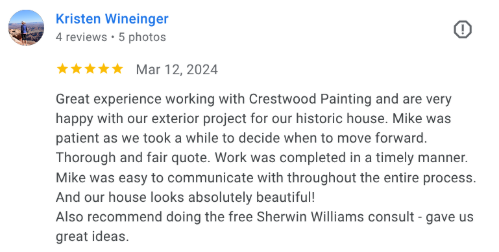
They did a fantastic job, were easy to work with, professional, and clearly care about the work they are doing.
How Many Colors?
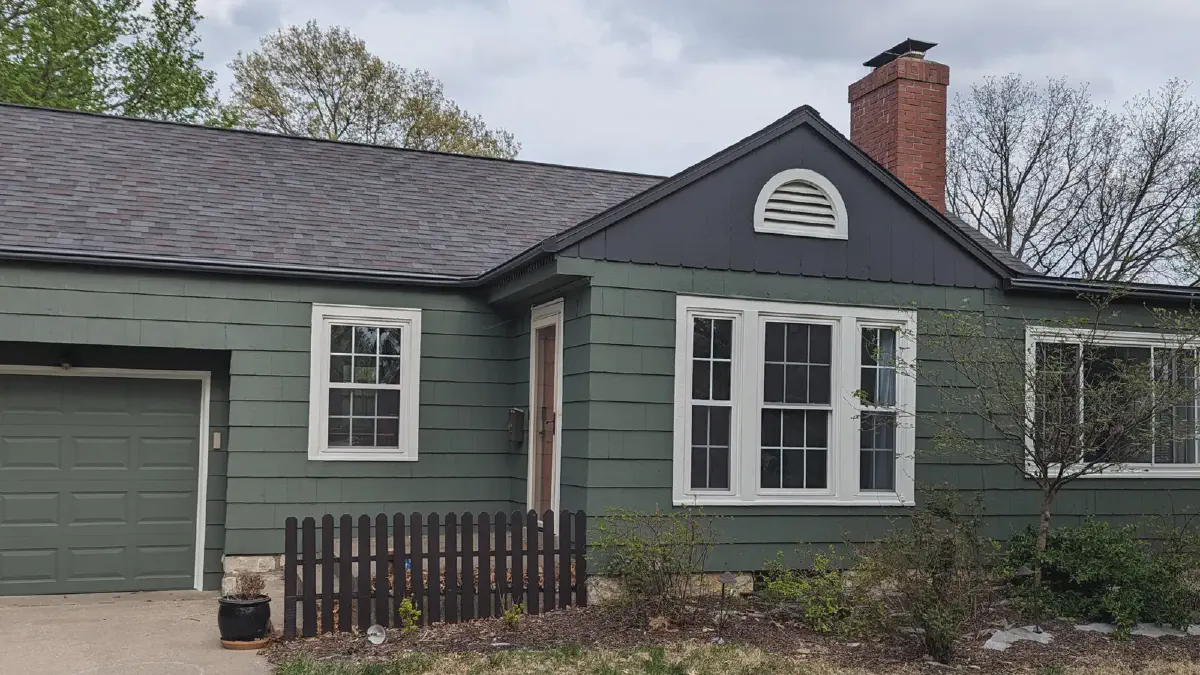
The number of colors depends on the size, style, and character of your home.
- Smaller or more modern homes typically look best with two or three colors.
- Larger or older homes often use more colors to highlight architectural details.
For example:
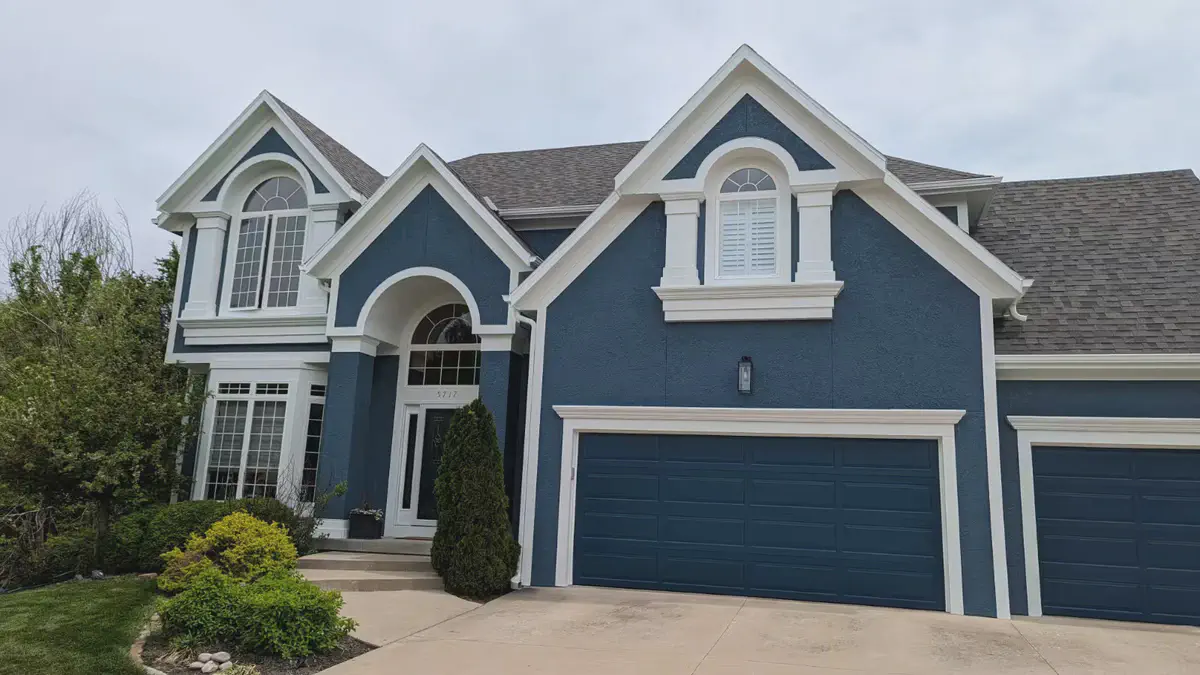
- A 1990s two-story home might use three colors: body, trim, and an accent.
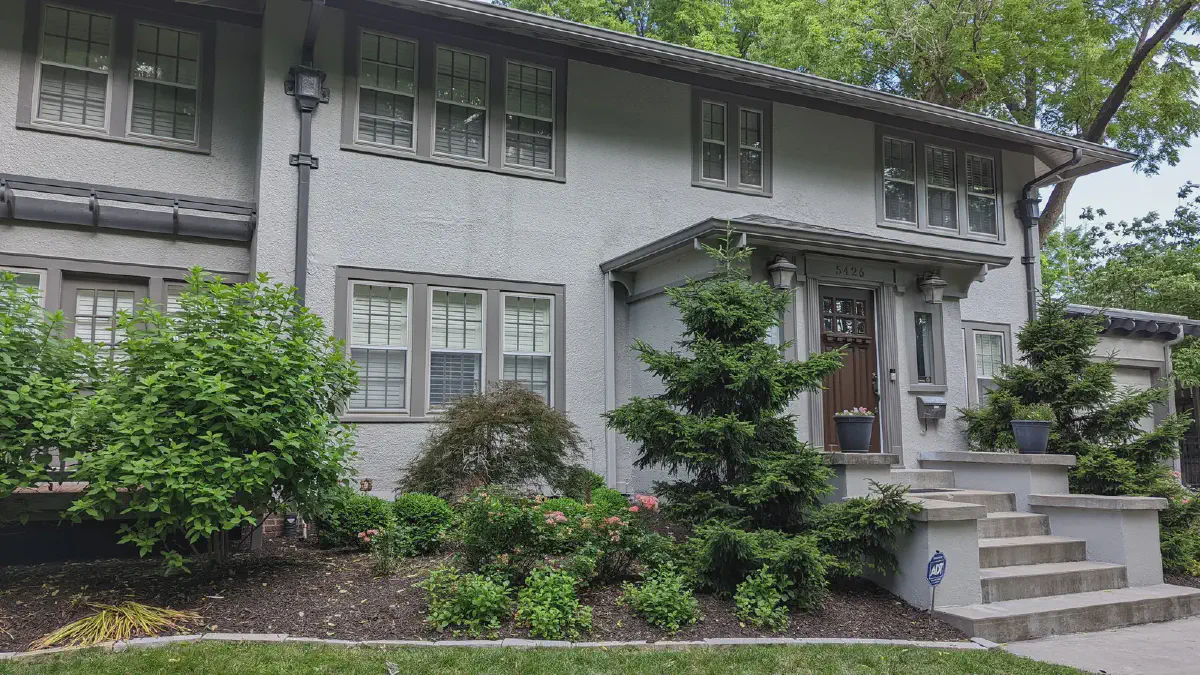
- A 1930s two-story home might shine with five colors: two body colors, trim, front door, and an accent.
Common House Color Terms
- Body – The main surface (stucco, siding, brick, etc.).
- Trim – Areas like windows, soffits, fascia, and door frames.
- Accent Colors – Used for small details to add contrast.
- Front Door – A chance to make a statement!
No need to memorize the lingo — just tell us what catches your eye, and we’ll guide you from there. See our color page for some more ideas.
Exterior Painting — Quick Facts
Tidy jobs, clear communication, on-time completion. Organized prep and weather-aware scheduling.
- Timeline
- 5 working days
- Typical Price
- $5000–$30000
- Warranty
- 2-year workmanship
- Prep
- Wash, scrape, sand; spot prime, Caulk gaps; minor carpentry as scoped, Weather checks each morning
- Coatings
- Benjamin Moore Regal Select Exterior / Aura, Sherwin-Williams Duration / Emerald
- Includes
- Body, trim, doors, soffits/fascia (as scoped), Color placement advice
- Excludes
- Masonry/stone unless already painted, Full carpentry replacement outside scope
- Service Area
- Neighborhoods: Brookside, Hyde Park, Valentine, Kansas City MO, Leawood KS, Overland Park KS, Prairie Village KS, Liberty MO
How Do I Prepare My Home for Painting?
After a project is Set To Go and so things run smoothly, we’ll share a quick checklist of things to do before we get started.
- Tidy Up – If you're concerned about anything (furniture? toys?) just let us know - we may be able to help you move things.
- Check the Yard – A quick scan for obstacles (including dog doo—thanks in advance!) makes setup and movement easier.
- Final Decisions – Still deciding on a color? Thinking about updating your house numbers? Or mailbox? Now’s the time!
- Check out our reviews
No stress, no surprises—we’ll walk you through everything and make sure you’re set for a smooth, easy process.
What Does Exterior Prep Work Include?
Before we begin painting, we make sure everything is ready for a smooth and safe work process.
Clear the Area
Ladders and painters will be moving, best to clear a safe path. Grills, furniture and toys top the list. There will be a “shop” area (usually in a corner of the back yard) for ladders and equipment.
Clean, Not "Pressure" Wash
Gently clean to-be-painted surfaces to remove cobwebs, dirt, and bird poop. No heavy pressure washing, as we don’t want to damage wood or inject water into your home.
Scrape, Prime, Caulk
Loose and peeling paint is scraped to a tight surface, bare wood gets primed for proper adhesion, nail pops addressed and gaps are sealed with caulk. For tricky surfaces like cedar trim, we use special oil primers to block tannin stains and peel-bonding primers to help smooth out chipped edges.
Windows
When it comes to windows, we take extra care. Vinyl and clad windows are masked for protection and clean paint lines. For older homes, we’ll carefully remove and label storm windows and then replace any missing or loose glazing for a weather-tight seal.
Stucco and Wood Repairs
If we encounter cracks or small holes in stucco, we make sure to patch them up with a purpose-made vinyl textured stucco material for a more seamless repair. Wood splits or gaps are sealed with high performance caulk sealant that adheres well and moves with the wood.
Jobsite Protection
We go the extra mile to keep your home protected—drop cloths, surface covers, even special wraps for your car (because no one wants a speckled driveway or a ‘custom’ paint job on their patio set).
We selected them based on positive referrals from neighbors.
Plants and Shrubs
We always take care to minimize damage to your plants and shrubs. However, since we’ll be moving ladders and equipment around, there may be some damage to plants or shrubs.
Specific Plants to Protect
We’ll flag specific plants with caution tape, or if necessary, we can arrange for a nursery to move the plants to a safer location temporarily.
Trim For Safe Access
It's a good idea to trim back any greenery that’s close to the house to help protect your landscaping. We’re careful, but a little prep goes a long way in ensuring everything stays safe.
How Does Exterior Painting Work?
When it comes time to paint, a combination of spray, roll, and brush techniques may be used. Spraying gives an even, consistent coverage, while brush and roll are used where spraying isn't as efficient. When needed, surfaces may be backrolled to ensure the best finish.
Painting Body & Trim
For a cleaner, more polished look, we often paint the “face” of trim for a consistent and neat appearance. This ensures a beautiful finish all around your home.
Products We Use
We use premium paints from trusted brands like Sherwin-Williams Duration and Benjamin Moore Regal Select. These are top-of-the-line paints that offer great coverage and long-lasting results. We follow the manufacturer’s instructions, which often specify one coat for this super high-quality product.
Gutters, Downspouts, and Utilities
We paint functional elements like gutters, downspouts, and utilities the same color as the surface behind them. These non-architectural elements should blend in, not stand out. However, we can also emphasize or de-emphasize features like basement doors or pet doors based on your preferences.
Final Cleanup
After we’re finished, we make sure everything is cleaned up. This includes removing masking tape, folding up drop cloths, reinstalling storm windows, and ensuring the grounds are clear of any debris. Any remaining paint will be left on-site for touch-ups.
Book an Estimate
We can take a look at your objectives and priorities and then narrow down the best options. There are many ways to approach this — let’s find what works best for your situation. Book an estimate time and let’s get started. No Drips. No Drama. Just your great-looking home.
What Else Should I Ask?
Learn how to compare painting bids , then see 12 Questions to Ask Before You Hire a Painter . Still more questions? Call or email - we’re ready to answer your questions.
Vocabulary List
There won’t be a test, but this list might save some searching. Yes, it’s boring. But it’s also short, so there’s that.
Exterior Paint Terms
- Cutting In – Painting the edges and corners of a wall with a brush before rolling the larger areas.
- Feathering – Blending the edges of painted sections to create a seamless transition.
- Flashing – Uneven shine or dull spots in paint caused by inconsistent application.
- Primer – A base coat that helps paint stick better and ensures even color.
- Drop Cloth – A fabric or plastic sheet used to protect floors and furniture from paint spills.
- Backrolling – Using a roller on sprayed paint (on some surfaces) to even coverage.
- Lap Marks – Visible streaks from overlapping paint strokes that dried too quickly.
- Caulk – A flexible material used to seal gaps and cracks before painting.
- Knots – Natural wood imperfections that may bleed through paint unless properly sealed.
- Alligatoring – A cracked pattern in older paint resembling alligator skin.
- Burnishing – Shiny patches on matte or flat paint caused by excessive rubbing or cleaning.
- Overspray – Paint mist that lands outside the intended area, often from spraying.
Exterior Wood Trim Terms
- Fascia – A vertical facing board covering the ends of roof rafters, often supporting gutters.
- Soffit – The underside of an overhang or eave.
- Rake Board – Angled trim along a sloped roofline.
- Corner Board – Vertical trim covering the outside corners of a building.
- Frieze Board – A horizontal trim between siding and soffit.
- Window Trim – The exterior trim surrounding windows.
- Door Trim – Exterior trim framing doors, often including a threshold.
- Drip Cap – Angled trim above windows or doors that deflects water.
- Water Table – A trim board at the bottom of siding to shed water.
- Eave – The lower edge of a roof extending beyond walls.
- Gable Vent Trim – Trim framing attic vents.
- Window Sill – The projecting trim at the bottom of a window.
- Brick Molding – A thick trim transitioning between siding and brick.
- Band Board – A horizontal trim breaking up sections of siding.
- Corbels – Ornamental supports under eaves or overhangs.
- Brackets – Structural or decorative angled supports under porches, eaves, or beams.